George Eastman: The Visionary Behind the Memories
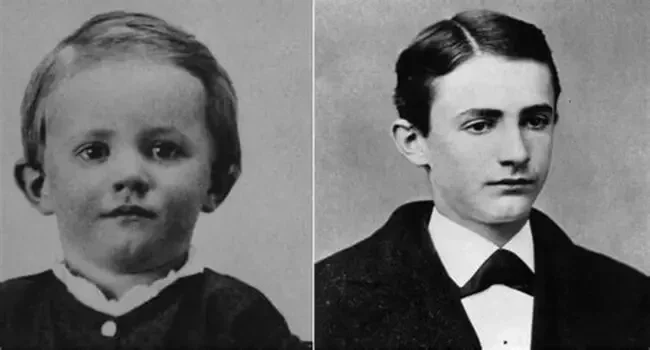
George Eastman's Childhood
George Eastman was born in 1854 and grew up in Waterville, New York, and then Rochester after his father passed away. In 1877, Eastman had hopes of traveling to Hispaniola and looking into real estate there. One of his friends suggested that he bring camera equipment along on his trip and he became so focused on photography that, even though he never went on the trip, he desired to find a way to improve the bulky photographic equipment he loved. So, he began learning from other photographers and experimenting. He began his experiments with wet and dry-plate photography.[1]
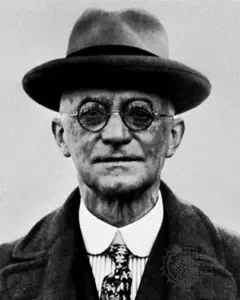
Founding of the Eastman Dry Plate Company
In 1880, Eastman began his business, selling dry plates. His company, Eastman Dry Plate Company, quickly gained success through the 80s. His patented dry-plate coating machine and other innovations helped bring him support from railroad businessman Henry Strong. Strong backed the company and slowly Eastman came up with more practical and convenient cameras.[1]
The company namesake Kodak camera, came in 1887 when Eastman created a “roll holder breast camera” with his employee, the inventor, William Walker.[2] This camera and many others, along with camera film, brought Eastman great success. The Kodak company cameras helped to make photography more accessible and bolstered the success of the new motion picture industry. [3]
Not only was Eastman known for the success of the Kodak company; he was also a major philanthropist. He donated millions of dollars to many different foundations and educational programs anonymously. He also gave hundreds of thousands of dollars to his employees in bonuses and benefits. Eastman even gave many of his personal shares in Kodak back to the company and employees. Eastman’s kindness to his employees is what truly revealed his philanthropy with other schools and foundations.[4] Eastman supported mainly educational and musical locations and endeavors. He supported the Massachusetts Institute of Technology, what is now known as the Eastman School of Music, and Tuskegee University. He also supported dental health and established dental clinics in Europe. The Kodak company today continues supporting many of Eastman’s causes and supports volunteering efforts among its employees.[5]
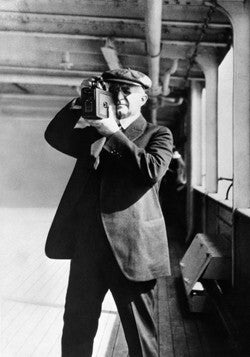
Unexpected Death
Eastman was able to give so much money away because he never married and much of his family passed before his success with Kodak. In his will, Eastman left his money for his philanthropic pursuits and for the community in Rochester. Throughout his life, he truly did focus on the needs of others; that was his passion along with photography. He also loved traveling. His life, however, ended as a bleak tale.[7]
By 1932, Eastman had been struggling with a debilitating spinal disease that made it hard to walk. His mother had experienced a similar disease, and he knew that she had ended her life in a wheelchair. In his pain and time at home, however, Eastman still supported and loved the arts. He hired an organist to perform during his breakfast time and continued his support until his death.[8] On March 14th, 1932, George Eastman committed suicide by shooting himself in the heart. An article by PBS describes: “besides Eastman, only two famous American inventors have died by their own hand.”[9] The physical pain he endured and the familial loss he experienced contributed to Eastman’s deep suffering and depression. While his philanthropic pursuits could not save him, his innovations and love for the community made a name for himself and for the Kodak company.
Footnotes
[1] David Lindsay, “George Eastman”, The American Experience (PBS, 2026), 1, https://www.pbs.org/wgbh/americanexperience/features/george-eastman/.
[2] “The History of Henry Strong,” Henry Strong Foundation, 2026, https://henrystrongfoundation.org/about/history.asp.
[3] Lindsay, “George Eastman,” 2026.
[4] “About George Eastman,” George Eastman Museum, https://www.eastman.org/about-george-eastman.
[5] “Pioneering Worker Bonuses and Profit-sharing,” Philanthropy Roundtable, https://www.philanthropyroundtable.org/almanac/pioneering-worker-bonuses-and-profit-sharing/.
[6] “History of Giving,” Kodak, 2026, https://www.kodak.com/en/company/page/community-history-of-giving/.
[7] Lindsay, “George Eastman”, 2026.
[8] Ibid.
[9] Ibid.